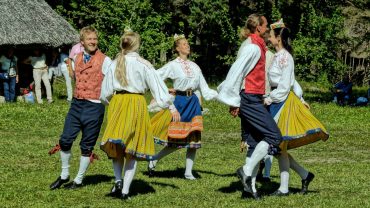
With its geography and historical richness, Latvia offers many options to please its visitors. Various festivals held in the country are also one of the reasons that attract the attention of tourists. The activities that increase in the country with the softening of the weather and the awakening of nature cause the interest in Latvia to increase. Latvia is famous for its unique music and dances. Latvian Song and Dance Festival, where you can witness the country’s local tunes and folk dances accompanied by it; hosts many concerts, choir and dance performances. The festival, which is held every year in July, has been celebrated since 1873 and is considered the most rooted event in the country.
Another remarkable organization for those interested in dance is the Riga Salsa Festival. Held every June since 2005, this festival features fascinating performances by Latin dance artists from all over the world. In order to make your Latvian holiday more enjoyable, the main tourist magnet events you will want to come across in the country are the Saulkrasti Jazz Festival, which is increasing in popularity every year, and the Positivus Festival, which hosts the world’s most famous music groups in the city of Salacgriva in the same month.
Riga, the capital of Latvia, the largest city in the Baltic Region; stands out as the centre of culture, politics, education, finance, trade, industry and tourism of the country and the region. With its comfortable hotels, stylish restaurants, spas, shopping centres and entertainment venues, the city hosts many tourists throughout the year, and there are also many historical buildings to visit and see. Riga’s buildings made in the Art Nouveau style are quite famous. You should definitely pass through Alberta, Elizabeth and Strelnieku streets, where you can see the best examples. The architect of many of these stunning buildings is Mikhail Eisenstein, the father of Sergei Eisenstein, the world-famous Russian director of Battleship Potemkin, one of the most important films of world cinema.
The Statue of Liberty, located in the capital Riga and one of the most valuable symbols of Latvia, should not be overlooked. St. Peter’s Church, built-in 1746, St. Peter’s Church, the oldest church in the city, built-in 1209, the 18th-century stone church of the Virgin Mary, and the Riga Dome Cathedral, which is on the UNESCO World Heritage List, are listed as religious buildings that you must see.
Riga is a city divided into two regions by the Daugava River. The most interesting building in the medieval Old Town district on the east bank of the river is the House of the Blackheads. The building that used to be a merchants guild; now the wine cellar in the basement serves as a museum with trade exhibits and grand ballrooms for you to visit. The Museum of the Sun, which exhibits the history of solar mythology and Latvian culture, the Three Brothers buildings, which are the oldest residences of Riga and later converted into a museum, and the Riga Castle, which hosts the Latvian National History Museum, are among the other noteworthy museums in the city.
Many beauties of the country are located around the capital, in short distances you can reach by car. For example, the historical city of Sigulda, less than an hour’s drive from Riga, is known as the Switzerland of Latvia with its stunning scenery. You should definitely see Krimulda Manor, which was built in the 19th century and surrounded by magnificent gardens, and the medieval Sigulda Castle and Krimulda Castle. Gutmanis Cave, located between Sigulda Castle and Turaida Castle, is very popular with the natural water flowing through it. This water, which is believed to be healing, is said to be good for the skin. The cave, which is 19 meters deep, is also worth seeing with its wonderful view. Gauja National Park, located on the border of the city of Sigulda, is a great spot to relax with its rich biodiversity, breathtaking views, and a peaceful and calm atmosphere.
During your visit to Latvia, you can stop by Kuldiga, which is called the Venice of the country, to see the widest waterfall in Europe with its staggering 240 meters, visit the historical castles in Cesis, one of the oldest cities in the country, and Liepaja, the capital of Latvia during World War I. You can enjoy the white sandy beaches of Vecliepaja and Dienvidrietumi.
Comment (0)